
The Art of Perfecting Your Manuscript: A Guide to Essential Editing Techniques
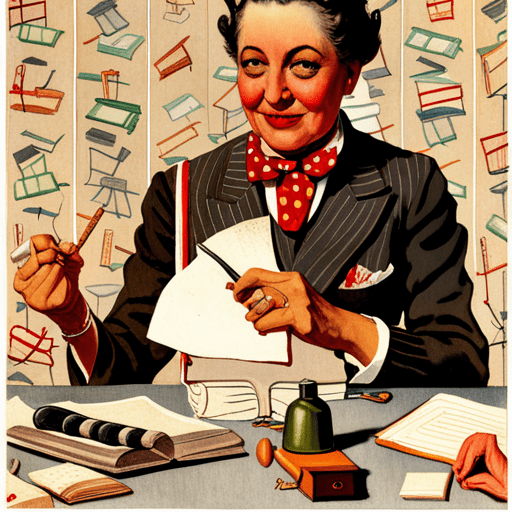
The number and types of editors involved in the process of publishing a book can vary depending on the book’s nature, length, publishing model (traditional, hybrid, or self-publishing), and budget. Typically, a book goes through several types of editing, each handled by different specialists.
It involves creating, organizing, and communicating ideas effectively. However, no well-structured or well-thought-out manuscript is ready for publication immediately after the first draft. A series of editing processes are necessary to polish and finesse your manuscript. These include developmental editing, line editing, copy editing, and proofreading. Understanding these different types of editing can significantly enhance your writing’s quality and elevate your manuscript from good to exceptional. Here are the types of editors a book might need.
Developmental Editing
Imagine a rough diamond that needs polishing and refining to bring out its brilliance. That’s where developmental editing comes in. An expert examines your manuscript’s overall content structure, akin to examining a rough diamond for the best possible cut. The developmental editor scrutinizes the individual components of your story or argument and how they fit together.
Whether it’s a fictional story or a nonfiction piece, the developmental editor’s goal is to enhance clarity, consistency, and coherence. In fiction, the editor looks at character development, plot structure, pacing, and the setting’s believability. For nonfiction, the editor focuses on the logical flow of arguments, ensuring your thesis is clear and your evidence effectively supports your points.
Developmental editing involves a comprehensive review beyond checking grammar and punctuation. It dives into your manuscript’s architecture, strengthening all elements to construct a compelling, convincing narrative.
Line Editing: Enhancing Readability and Flow
As the name suggests, line editing is an inspection that occurs line by line. Its purpose is to improve your text’s readability and flow, making it enjoyable and engaging for your target reader.
A line editor doesn’t just check if the words make sense. They fine-tune the text by identifying areas of wordiness, clichés, redundancies, or awkward transitions between sentences. The editor works on refining and polishing the language, eliminating unnecessary details, thereby reducing the cognitive load for the reader.
This editing phase is crucial in ensuring your manuscript is fluid, efficient, clear, and concise without losing its distinctive voice or originality. It ensures your manuscript is just as easy to read as it is engaging.
Copyediting: It’s All in the Details
Following developmental and line editing, the copyediting phase begins. This is where the editor brings out their magnifying glass and meticulously scans for grammar, spelling, punctuation, syntax, and usage errors.
But it doesn’t end there. The copyeditor will also ensure adherence to a specific style guide, whether it be APA, Chicago, MLA, or any other preferred convention, depending on your audience and the content. They keep an eye on capitalization rules, numbering, headers and footers, citations, and other stylistic details.
By doing this, the editor helps bring uniformity and consistency to your work. Every mistake or inconsistency corrected, or every sentence made clearer, supports the overall goal of making your work error-free and easily readable.
Fact-checker (if necessary)
For some non-fiction books, especially those that deal with technical or specialized subjects, a fact-checker may be employed to verify the accuracy of the information presented.
The Final Guard: Proofreading
The last defense against errors, inconsistencies, and overlooked details is proofreading. This is the final stage of the process, where the “manuscript” becomes a “proof.” Essentially, the proofreader conducts a sweep for typos, misspellings, punctuation errors, and formatting inconsistencies that might have been missed in prior reviews^4^.
They’re also focusing on design-related elements, checking for correct headers and footers, numbering, consistency in fonts, and any other formatting anomalies. In addition, they check for issues related to cross-references and endnotes. Imagine them crossing the ‘T’s and dotting the ‘I’s, ensuring a neatly presented, publication-ready work.
Who Does What When?
In traditional publishing, different people often fill these roles, ensuring that multiple sets of eyes examine the book at different stages. In self-publishing, authors might hire one or two editors who can cover multiple types of editing, or they may choose to do some of the editing themselves. However, this can sometimes compromise the quality of the final product.
The sequence generally follows the order listed above, starting with the broader aspects of the manuscript and moving towards the finer details. Each type of editing plays a crucial role in ensuring that the book is of high quality and ready for its audience.
Wrapping Up
So, there you have it – an overview of the four pillars of the editing process. Understanding these editing forms is essential to ensure your work comes out the other side of the process as the best version possible. Remember, investing efforts into each edit, from developmental through to proofreading, equips your manuscript to communicate your ideas as powerfully and effectively as possible. In other words, the small details make a big difference in the success of your book. Happy writing!