
Awake In the Network: The Career Survival Guide for the AI Age
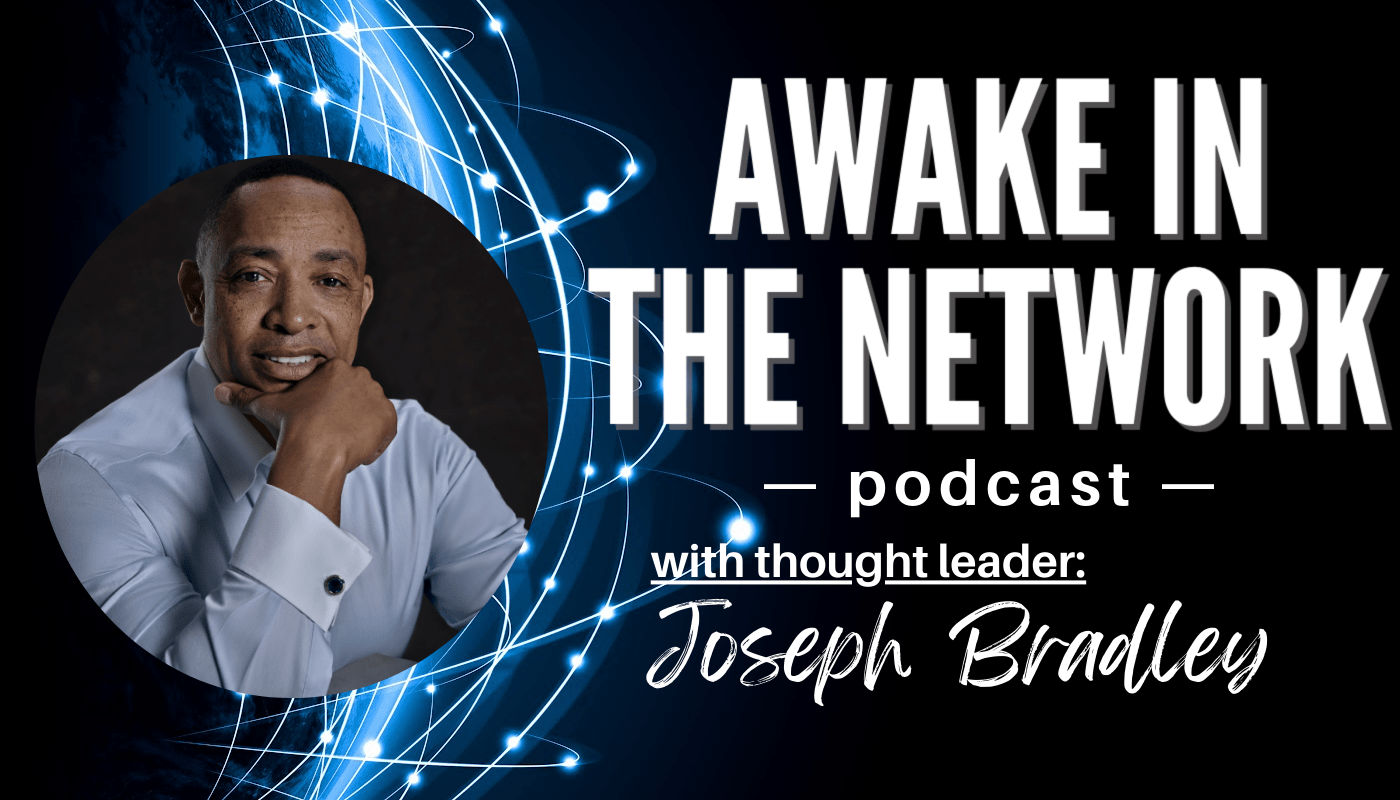
The Boy Who Saw Tomorrow
Picture this: It’s 1980. An 11-year-old boy walks into Great Western Savings with his father, opens a business account, and launches “Effortless Programming,” teaching BASIC programming to neighborhood kids from his living room.
That boy was Joseph Bradley. Today, he’s the CEO leading a $500 billion initiative to build the world’s first cognitive city in Saudi Arabia.
This isn’t just another rags-to-riches tech story. It’s a masterclass in surviving and thriving during the most disruptive technological shift in human history. And it all started with a simple philosophy that would reshape entire industries.
The Foundation: When Respect Became Revolution
Joseph’s father gave him more than a Commodore PET computer that day in 1980. He gave him a philosophy that would become his secret weapon:
“Respect costs nothing, but it means everything.”
But this wasn’t the passive respect of “yes, sir, no, ma’am.” This was active respect—the kind that listens with genuine curiosity, seeks to understand before being understood, and asks the most important question of all: “How can I help you succeed?”
This principle would guide Joseph through an extraordinary career trajectory:
- Becoming Pacific Bell’s youngest CFO at 28
- Surviving the dot-com crash that separated the pretenders from the innovators
- Creating Cisco’s “Internet of Everything” concept that grew into a $3 billion business
- Leading Saudi Arabia’s NEOM project—the most ambitious smart city initiative in human history
The Cisco Revelation: Questions as Currency
Under the mentorship of legendary CEO John Chambers at Cisco, Joseph discovered something profound that would prove prophetic in the age of ChatGPT:
In a world where all answers are becoming available instantly, value lies in knowing what questions to ask.
This insight became the foundation of his book, “Questioneering,” which was published years before ChatGPT proved him right. While the tech world obsessed over AI’s capabilities, Joseph saw the real revolution:
“It’s not the output that’s amazing about what ChatGPT generates. What you’re missing is that someone asked an unbelievable question. If you can think it, you can create it.”
AI doesn’t replace human creativity—it amplifies the power of human curiosity.
The Saudi Arabia Gamble: Real-Time is Too Late
When that mysterious call from Saudi Arabia finally got through (Joseph had declined it five times), it led to the opportunity that would redefine what’s possible. The Crown Prince wasn’t just building another smart city. He was reimagining what a city could be.
Joseph’s breakthrough insight changed everything: Real-time is too late.
“We learned from COVID—by the time we found out in real-time, the damage was done. The future isn’t about smart cities that react; it’s about smart cities that anticipate. It’s about cognitive cities that predict.”
Under his leadership, NEOM became the world’s first cognitive community, a city built not around assets, but around human intelligence. A place where AI doesn’t just respond to your needs; it anticipates them.
The Next Evolution: Your Digital Twin
Today, Joseph is pioneering what comes after the AI assistant: Identic AI. Not an agent that serves you, but a digital twin that is you.
Imagine having a version of yourself that:
- Works 24/7 while you sleep
- Thinks with your knowledge and reasoning
- Maintains your values and decision-making patterns
- Handles routine tasks while you focus on creativity and relationships
This isn’t science fiction. It’s the logical next step in
Guide for the AI Age
So what does Joseph’s journey teach us about surviving the AI revolution? Three critical lessons:
1. Master the Art of Questioneering
Your value won’t come from having answers—AI has those. Your value comes from asking questions that haven’t been asked, seeing problems that haven’t been seen, and imagining possibilities that haven’t been imagined.
2. Practice Active Respect
In a world increasingly dominated by digital interactions, the ability to genuinely connect with and understand other humans becomes your competitive advantage. Technology amplifies human connection; it doesn’t replace it.
3. Think in Cognitive Systems, Not Just Smart Solutions
Don’t just ask “How can AI help me work faster?” Ask “How can AI help me think differently?” The future belongs to those who can design systems that predict and adapt, not just react.
Your Questions Are Your Superpower
Joseph’s story reveals a profound truth: In the AI revolution, your career won’t survive by competing with machines. It will thrive by asking the questions that only humans can ask.
The 11-year-old who opened a business account in 1980 understood something that many adults still miss: Success isn’t about having all the answers. It’s about having the curiosity to ask better questions.
As we stand on the brink of the cognitive city era, one thing is certain: The future belongs not to those who can prompt AI most efficiently, but to those who can question most creatively.
The bottom line? What questions are YOU asking?
***
Joseph Bradley, Chief Executive Officer, TONOMUS – BIO
Joseph Bradley is a humanist, visionary, and galvanizer whose work redefines the intersection of technology and humanity. As a world-renowned speaker and human-centric leader, Joseph champions the development of technological solutions with the human perspective at their core. Known for his ability to inspire and unite employees, customers, and stakeholders, he has consistently driven groundbreaking innovations that prioritize humanity in a rapidly advancing digital world.
As the CEO of TONOMUS, the first subsidiary of NEOM, Joseph is spearheading the creation of the world’s first cognitive community. Under his leadership, TONOMUS has evolved from NEOM’s technology and digital sector to become a global pioneer in cognitive AI technologies. For the past five years, he has directed the largest futuristic tech project in the world—a $500 billion initiative that involves designing, deploying, and implementing transformative AI-driven solutions.
Joseph’s groundbreaking work extends beyond TONOMUS. As the co-creator and co-founder of the “Internet of Everything” (IoE) concept, he drove a $14.4 trillion value-at-stake campaign at Cisco, shaping the global understanding of IoE’s potential. Earlier in his career, as Vice President at AT&T, he led the rollout of high-speed broadband services, solidifying his reputation as a leader in transformative technology deployments.
A proven futurist, Joseph has made bold predictions that have shaped conversations about technology and society. In 2015, he foresaw that by 2020, 50% of the information consumed would be false—an insight that presaged today’s concerns about misinformation. He has emphasized the critical role of asking the right questions in the age of AI, predicting the explosion of smart devices, the rise of the Internet of Things, and the necessity of a common data architecture.
Joseph is also credited with coining the term “cognitive cities,” signaling a paradigm shift from smart cities to cities powered by cognitive AI. His pioneering vision continues to redefine how we think about technology’s role in shaping the future of work, living, and human potential.