
A Powerful New Voice from New Teen Author, Colton Fidelman
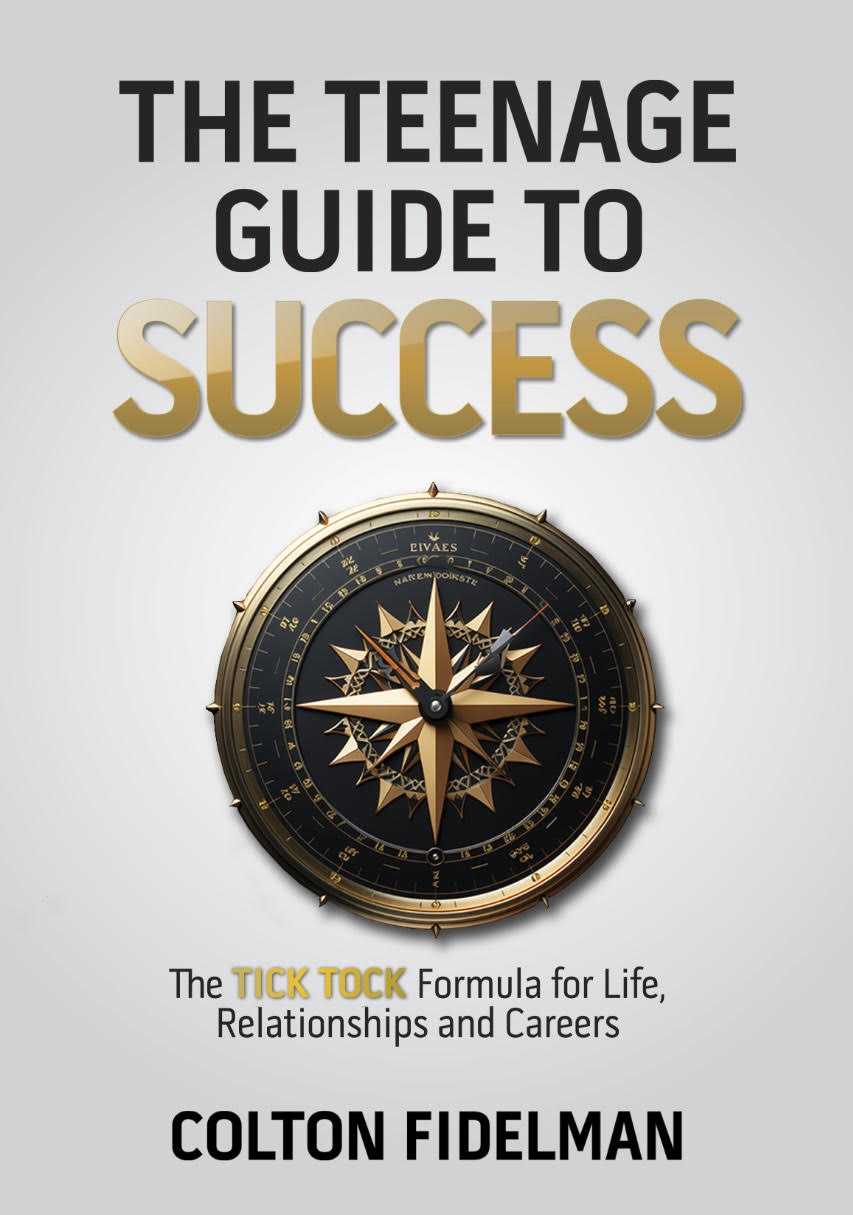
Meet Colton Fidelman, a teen advocate for responsible technology use and mental health, particularly among teenagers. With his forthcoming book, “The Teenage Guide to Becoming Successful – The TICK TOCK Formula for Life, Relationships, and Careers,” Colton has emerged as a passionate voice supporting age restrictions on social media platforms. Inspired by GOP candidate Vivek Ramaswamy’s proposal to limit access to addictive social media until age 15 or 16, Colton emphasizes the importance of prioritizing the health and future of young minds. I recently had the opportunity to chat with Colton.
Melissa: What was the genesis of your interest in networking and mentoring?
First of all, networking was necessary to get the interviews needed for my book. Finding people to talk to about these things was the crux of what needed to be done. It started small. I would call family friends and ask them how they had become successful, and it sprouted from there.
Mentoring came with that. I never explicitly sought a mentor, but the more I learned from these people, the more I realized that they could be more helpful to me than I initially believed. When I interviewed these billionaires and successful people, their outlooks on life were much different than mine. They had come from so many different places so many different experiences.
Mike Mills is a good example. He was in the band REM. His life is radically different than mine as a musician, on the road all the time and living a very spontaneous life. I couldn’t relate to that, but he still had advice that no matter where it was applied, it could still work. He talked about how he found a mentor at 17 years old and explained that this person was like a brother, taught him how to be self-confident, and broadened his worldview. Ian helped him in his musical career and showed him how to get around the industry. Mike Mills appreciated that, told me how that affected his life, and explained why he believed mentors were extremely important.
From networking to mentoring, the mentoring piece was a discovery. It was something that I didn’t anticipate.
Melissa: Some networkers are transactional. You’ll meet and never hear from them again. However, mentors have more connections. They’re in your life for a longer period to help you in various ways. I was going in on the networking end and came out on more of the mentoring as an important skill to help you get started.
When interviewing them, they talked about mentors so much that I had to weave it into my questions for future interviewees. It’s not something that I initially thought of. I didn’t have much of a mentor. I’d say my dad was probably the best. But I never relied so much on another person for experience, probably because I was naïve. I’ll admit it. Everybody is at one point or another. You don’t even know what you don’t know when there isn’t somebody there telling you what you don’t know.
Interviewing was the bulk of my process and took two of the three years. It was difficult to find these people, cold emailing billionaires, finding their connections, and talking to their friends. A few months in, after interviewing my first five people, I realized that these people heavily influence those who have taught them before. Out of the 20 people I interviewed, 90% of them talked explicitly about mentors about 25% of the time. They definitely cared a lot about the people who had taught them. We all need teachers. We’re not born knowing everything like some of us might think. It’s something that they stressed.
There’s one person, Walter O’Brien, who is extremely smart. He has a TV show called Scorpion. He visited me at my house and discussed the book and other things. He was a mentor to me to some extent. I don’t talk to him much, but I learned some things from him that are really important. I learned subtle things from what he would talk about in business, religion, crypto-currency, coding, and AI. I didn’t know as much about many intellectual topics before talking to him.
Melissa: You have a decided maturity to yourself. Do you attribute a lot of that to the interviews? It sounds like the interviews were like getting a college education.
I had to teach myself how to interview people. On top of learning everything they said – and taking that all in and using it and applying it to my own life – I learned the very important skill of resourcefulness. I would look them up online – Wikipedia or biographies – and find things they’d done in the past to stress better the importance of them being in the book. I would mention that they had partaken in charities or spoken to many teens or they themselves had mentors (later on when I finally saw the importance of mentors). I learned how to be resourceful in that way.
At first, I was not very good at asking questions and finding the subtleties in what people said. But now, I think I can find that in whatever someone says. I taught myself how to ask good questions, which I think is probably as important as a skill as the things that they were talking about.
I’m a senior in high school. I like the business aspect of writing a book but don’t want to go into business. I want to learn a skill different from what I’ve learned throughout these three years. That’s engineering – astronautical engineering. I want to start in the space industry and maybe someday start my own company.
I like to read Sci-Fi books. They’re really interesting, and there are a lot of good stories there. Instead of just having the world, you have a hundred or a thousand to pull from. There are so many stories that can be made through the imagination with regard to space.
Other places have also influenced me. I’ve liked space since fourth grade. I like watching people like Elon Musk or Richard Branson. Richard Branson just had his first successful Virgin Galactic flight with passengers. He’s also revolutionizing the space industry, just as Elon Musk is. They may not know me personally but are still mentors because they show the world that it can be done.
You are the sum of your peers. Getting information from all walks of life and ages is very important. There are a few friends that I have who I can speak to on this, but most people are focused on school or having fun at their age. I completely understand. But I’ve been focused on building a base and finding networks for every aspect of life that I might want to follow. Instead of engineering, if I wanted to get into business or investing, I have Howard Marks, who works on Wall Street and is good friends with Warren Buffet. I think having those people is really important.
Initially, skill is paramount at the beginning of your career journey. However, building connections and fostering mutually beneficial relationships become key as you progress. The individuals proactively seek opportunities on your behalf, recognize your potential, and extend an invite, saying, “Let’s bring Colton on board; his perspective is invaluable.” This collaboration broadens your horizons and enriches your understanding, offering many insights.
That’s the book’s purpose: putting myself out there so people can see me as a mentor and maybe ask me deeper questions about it later. That’s why I’m on podcasts like this. I’m expanding on what I was talking about in the book. That’s extremely important for people to know: putting yourself out there so that people can connect to you, sharing knowledge, and making the world a better place.
With all the knowledge I accumulated during these interviews, it was like a kettle about to burst. I initially thought, “People are going to love this information.” I care about these people, and my generation is not in the best spot. Suicide is at its highest rate, and so is depression. This information is something that everybody should know, and everyone should have. If not, we will continue down this negative path of self-destruction that people have adopted for the last 10 years.
A lot of people don’t have those mentors anymore. Many people act stupid on social media, and people take after that. It’s better if these people had real advice from real, successful people to guide them rather than somebody who doesn’t really know what they’re doing. I’m excited to get this information out because it will help people.
The book is coming out sometime towards the end of October. I’m on LinkedIn for now and some more social media pages so people can follow me and see what’s happening. I’m planning on having the opening book ceremony at my school. Then, possibly, go on tour. For now, if anyone wants to sign up, they go to teenage.guru, and they can see updates and references to the book and get a free chapter.
I use TikTok as an acronym in the book. I researched acronyms in business books and their success, so I made this acronym as a funny twist so that people can follow that formula and learn how to be successful—mentoring there.
Melissa: So here is my final question: What is the best question you have ever been asked?
The best question I’ve ever been asked is, “How did you turn nothing into something?” There’s so much information in that. Turning the book idea into something tangible, something people can buy, read, and learn from. Taking and putting your ideas to work is probably the best lesson I’ve ever learned. That’s how humanity has progressed for the last 10,000 years. Learning that lesson was the most important thing; I could talk about it for hours.
Colton Fidelman is the author of the forthcoming book The Teenage Guide to Becoming Successful – The TICK TOCK Formula for Life, Relationships and Careers. Check out his site at https://www.colefidelman.com/ The book should be out in late October.