
The Value of Editorial Reviews
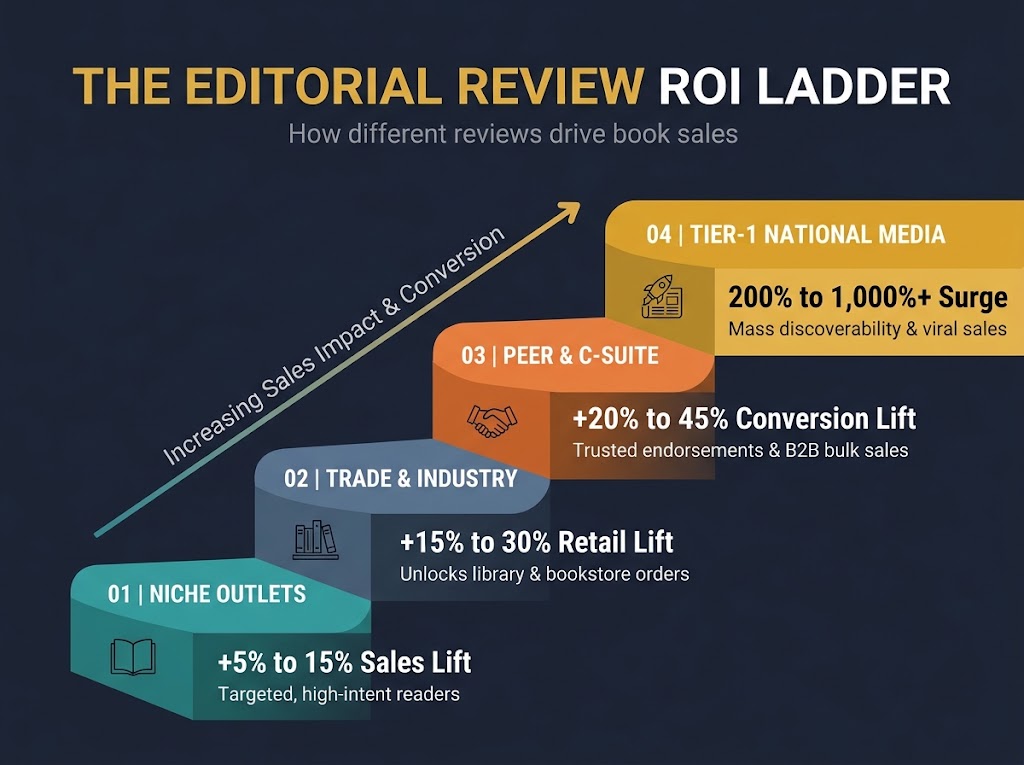
What is the value of editorial reviews? What percentage of each can lift sales, and by how much?
Core Value of Editorial Reviews
Gatekeeping for Retailers and Libraries: Traditional bookstores (e.g., Barnes & Noble, indie bookstores) and public/academic libraries rarely purchase or stock titles that lack recognized trade reviews (such as Publishers Weekly, Kirkus, Library Journal, or Booklist).
Above-the-Fold Authority on Sales Pages: Unlike customer reviews buried at the bottom of an e-commerce page, editorial reviews can be placed directly in the metadata, book jacket copy, and Amazon’s dedicated Editorial Reviews or A+ Content sections, capturing attention before a reader ever scrolls down.
De-risking the Unknown Author: For debut authors, self-published titles, or non-fiction experts entering a competitive category, a reputable blurb or review functions as an institutional seal of approval, cutting perceived purchasing risk.
Marketing and PR Asset: Pull quotes from editorial reviews serve as hooks for ad copy, press releases, media pitches, speaking proposals, and media kit one-sheets.
Sales Lift by Editorial Review Category
Because sales lift is driven by conversion rate (the percentage of page visitors who actually buy) rather than automated organic traffic algorithms alone, the quantifiable impact varies depending on the review’s tier:
Key Difference: Editorial Reviews vs. Customer Reviews
Customer Reviews drive discoverability and algorithmic traction. Algorithms heavily favor products once they hit critical mass (e.g., reaching 5 to 10 verified customer ratings can lift initial conversion up to 100–270%).
Editorial Reviews drive conversion rate and prestige. They don’t factor into average star ratings, but they actively persuade fence-sitters who need an authoritative reason to invest time and money in a book.
Implementation Next Steps
Leverage Author Central: Add 3 to 5 curated snippets (1–2 sentences maximum each) to the dedicated Editorial Reviews module in Amazon Author Central, bolding the reviewer’s name or credential.
Feature in A+ Content: Create visual comparison graphics or text callouts highlighting your top trade or peer endorsements in your primary A+ content banners.
Extract PR Soundbites: Pull 5- to 7-word punchy quotes for the front cover thumbnail, back cover blurb, and LinkedIn/social ad creatives.