
Your Career Won’t Survive the AI Revolution (But Your Questions Will)
The Boy Who Saw Tomorrow
Picture this: It’s 1980. An 11-year-old boy walks into Great Western Savings with his father, opens a business account, and launches “Effortless Programming”—teaching BASIC programming to neighborhood kids from his living room.
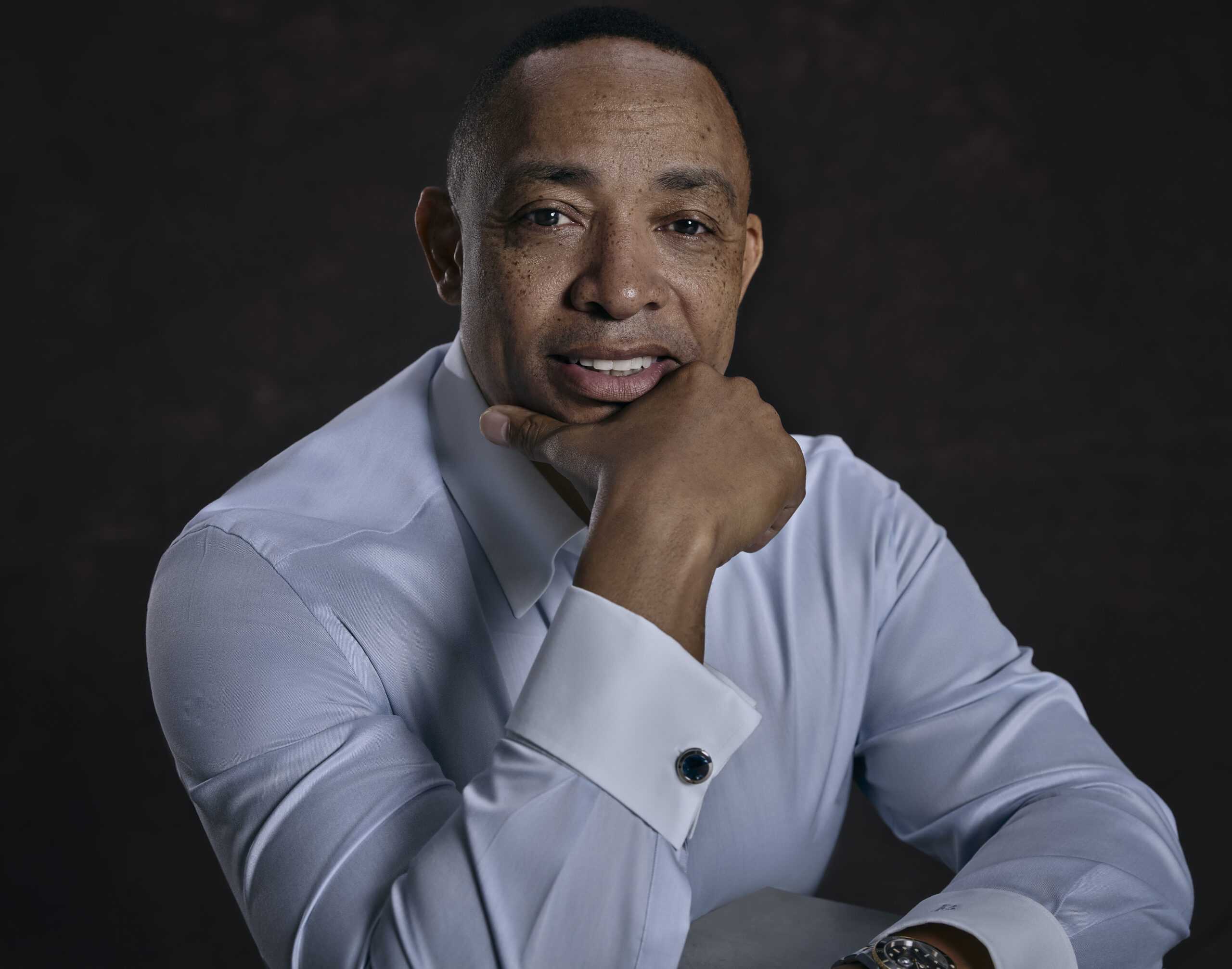
That boy was Joseph Bradley. Today, he’s the CEO leading a $500 billion initiative to build the world’s first cognitive city in Saudi Arabia.
This isn’t just another rags-to-riches tech story. It’s a masterclass in surviving—and thriving—during the most disruptive technological shift in human history. And it all started with a simple philosophy that would reshape entire industries.
The Foundation: When Respect Became Revolution
Joseph’s father gave him more than a Commodore PET computer that day in 1980. He gave him a philosophy that would become his secret weapon:
“Respect costs nothing, but it means everything.”
But this wasn’t the passive respect of “yes, sir, no, ma’am.” This was active respect—the kind that listens with genuine curiosity, seeks to understand before being understood, and asks the most important question of all: “How can I help you succeed?”
This principle would guide Joseph through an extraordinary career trajectory:
- Becoming Pacific Bell’s youngest CFO at 28
- Surviving the dot-com crash that separated the pretenders from the innovators
- Creating Cisco’s “Internet of Everything” concept that grew into a $3 billion business
- Leading Saudi Arabia’s NEOM project—the most ambitious smart city initiative in human history
The Cisco Revelation: Questions as Currency
Under the mentorship of legendary CEO John Chambers at Cisco, Joseph discovered something profound that would prove prophetic in the age of ChatGPT:
In a world where all answers are becoming available instantly, value lies in knowing what questions to ask.
This insight became the foundation of his book “Questioneering,” published years before ChatGPT proved him right. While the tech world obsessed over AI’s capabilities, Joseph saw the real revolution:
“It’s not the output that’s amazing about what ChatGPT generates. What you’re missing is that someone asked an unbelievable question. If you can think it, you can create it.”
AI doesn’t replace human creativity—it amplifies the power of human curiosity.
The Saudi Arabia Gamble: Real-Time is Too Late
When that mysterious call from Saudi Arabia finally got through (Joseph had declined it five times), it led to the opportunity that would redefine what’s possible. The Crown Prince wasn’t just building another smart city. He was reimagining what a city could be.
Joseph’s breakthrough insight changed everything: Real-time is too late.
“We learned from COVID—by the time we found out in real-time, the damage was done. The future isn’t about smart cities that react; it’s about smart cities that anticipate. It’s about cognitive cities that predict.”
Under his leadership, NEOM became the world’s first cognitive community—a city built not around assets, but around human intelligence. A place where AI doesn’t just respond to your needs; it anticipates them.
The Next Evolution: Your Digital Twin
Today, Joseph is pioneering what comes after the AI assistant: Identic AI. Not an agent that serves you, but a digital twin that is you.
Imagine having a version of yourself that:
- Works 24/7 while you sleep
- Thinks with your knowledge and reasoning
- Maintains your values and decision-making patterns
- Handles routine tasks while you focus on creativity and relationships
This isn’t science fiction. It’s the logical next step in human-AI collaboration.
The Career Survival Guide for the AI Age
So what does Joseph’s journey teach us about surviving the AI revolution? Three critical lessons:
1. Master the Art of Questioneering
Your value won’t come from having answers—AI has those. Your value comes from asking questions that haven’t been asked, seeing problems that haven’t been seen, and imagining possibilities that haven’t been imagined.
2. Practice Active Respect
In a world increasingly dominated by digital interactions, the ability to genuinely connect with and understand other humans becomes your competitive advantage. Technology amplifies human connection; it doesn’t replace it.
3. Think in Cognitive Systems, Not Just Smart Solutions
Don’t just ask “How can AI help me work faster?” Ask “How can AI help me think differently?” The future belongs to those who can design systems that predict and adapt, not just react.
Your Questions Are Your Superpower
Joseph’s story reveals a profound truth: In the AI revolution, your career won’t survive by competing with machines. It will thrive by asking the questions that only humans can ask.
The 11-year-old who opened a business account in 1980 understood something that many adults still miss: Success isn’t about having all the answers. It’s about having the curiosity to ask better questions.
As we stand on the brink of the cognitive city era, one thing is certain: The future belongs not to those who can prompt AI most efficiently, but to those who can question most creatively.
What questions are you asking?
Joseph Bradley, Chief Executive Officer, TONOMUS
Joseph Bradley is a humanist, visionary, and galvanizer whose work redefines the intersection of technology and humanity. As a world-renowned speaker and human-centric leader, Joseph champions the development of technological solutions with the human perspective at their core. Known for his ability to inspire and unite employees, customers, and stakeholders, he has consistently driven groundbreaking innovations that prioritize humanity in a rapidly advancing digital world.
As the CEO of TONOMUS, the first subsidiary of NEOM, Joseph is spearheading the creation of the world’s first cognitive community. Under his leadership, TONOMUS has evolved from NEOM’s technology and digital sector to become a global pioneer in cognitive AI technologies. For the past five years, he has directed the largest futuristic tech project in the world—a $500 billion initiative that involves designing, deploying, and implementing transformative AI-driven solutions.
Joseph’s groundbreaking work extends beyond TONOMUS. As the co-creator and co-founder of the “Internet of Everything” (IoE) concept, he drove a $14.4 trillion value-at-stake campaign at Cisco, shaping the global understanding of IoE’s potential. Earlier in his career, as Vice President at AT&T, he led the rollout of high-speed broadband services, solidifying his reputation as a leader in transformative technology deployments.
A proven futurist, Joseph has made bold predictions that have shaped conversations about technology and society. In 2015, he foresaw that by 2020, 50% of the information consumed would be false—an insight that presaged today’s concerns about misinformation. He has emphasized the critical role of asking the right questions in the age of AI, predicting the explosion of smart devices, the rise of the Internet of Things, and the necessity of a common data architecture.
Joseph is also credited with coining the term “cognitive cities,” signaling a paradigm shift from smart cities to cities powered by cognitive AI. His pioneering vision continues to redefine how we think about technology’s role in shaping the future of work, living, and human potential.
The Full Transcript: Read It and Reap the Benefits
Awake in the Network Podcast Transcript: Featuring Joseph Bradley
Intro: Life is a game of connect the dots on many levels. When it comes to business, being aware of those connections, great and small, can often be the difference between success and failure. Get ready for a masterclass in networking on the “Awake in the Network” podcast, where destiny happens. Brought to you by NetWorlding Publishing, books and more that make the world better. Here are your hosts, Billy Dexter and Melissa G. Wilson.
Melissa G. Wilson: Okay, Billy, you said you were “coming in hot.” What’s this all about? What’s going on over there?
Billy Dexter: Well, as I said, I’m in Detroit, my hometown. I was invited to this conference called the Detroit Homecoming, where they bring back about 250 former Detroiters. They call us expats because we’ve gone and lived somewhere else. The entire goal, spanning two and a half days, is sponsored by Warren Buffett and Dan Gilbert, who have made a significant investment in revitalizing Detroit after it became the first major city to file for bankruptcy.
They bring us back because we have a connection to the city, show us the progress, and ask us to find a way to jump in and help out. I was first invited 12 years ago and haven’t been back since. As we go through the tours and receive updates on the school systems, the new economy, and all the development, I had a big epiphany. The buildings I’ve been in over the last couple of days are the same ones I used to dream about working in when I was a kid. I used to dream about wearing a suit to work downtown, and now I’m here as a professional, seeing it all through the eyes of that 17-year-old kid.
Melissa G. Wilson: That’s so cool. It’s like you took a trip back in time.
Billy Dexter: Back in time, yep.
Melissa G. Wilson: I love time travel. This is like a Hallmark movie in the making.
Billy Dexter: I love Hallmark.
Melissa G. Wilson: And I hate Hallmark.
Billy Dexter: I know you do. Don’t say you hate it; it’s all about love.
Melissa G. Wilson: Okay, you’re exonerated for five minutes. Please be quiet while I introduce our guest. I am very happy to share with our audience that we have Joseph Bradley, the Chief Executive Officer of Tonomus. What I love about his background is that he’s a humanist along with a visionary whose work redefines the intersection of technology and humanity. It doesn’t get better than that.
As a world-renowned speaker and human-centric leader, Joseph champions the development of technological solutions with the human perspective at their core. As the CEO of Tonomus, the first subsidiary of NEOM, Joseph is spearheading the creation of the world’s first cognitive community. For the past five years, he has directed the largest futuristic tech project in the world, a $500 billion initiative that involves designing and implementing transformative AI-driven solutions.
It goes on and on, but I’m going to make him talk about it. We really like to go back in time and find out: why are you doing what you’re doing now? What made you get there? Welcome, Joseph.
Joseph Bradley: Thank you very much. It’s great to be here.
Billy Dexter: We want to learn about the young kid growing up in California, the whole road through Cisco, and how you made that turn to get all the way to Dubai.
Joseph Bradley: Well, it’s great to be here and have an opportunity to talk to you guys. I guess I’d start by saying I wasn’t a “timeout generation” kid. Both my mom and my dad left me many gifts. We lost my dad about a month ago, but he had a huge shadow.
The first thing they taught me was about respect. I think that’s the number one thing. They had a standard, and I learned very early on that respect costs nothing, but it means so much. It changes everything. My dad challenged me to learn something from everyone. When he said, “respect someone,” he meant you were going to be an active listener, with active curiosity and passion for what they were saying and how they were doing it. It’s an active show of compassion.
My dad was always about telling me, “Whatever you do, be the best of you possible.” He and my mom stressed that it started with intelligence. He would often discuss intelligence and education. He would say, “Education is a starting point, but intelligence is the application of knowledge.” It shows that you can actually apply what you’ve learned.
That started me on my entrepreneurial track. I remember going to him when I was 11 and saying, “Dad, I want to be a paperboy,” because I wanted to buy the new Mattel electronic toys. He gave me this look, like, What is wrong with you? He sat me down and discussed my goals with me. The next day, he brought home a Commodore PET computer with a cassette drive and a book on BASIC programming. He just said, “Do something with this.”
So, I learned it and was excited. About four weeks later, he took me to Great Western Savings, and we opened up a business account. We registered a fictitious business name at the courthouse and chose “Effortless Programming.” He made me create flyers, and I handed them out at church. A week later, I got my first customer. Within about a month, I was teaching basic programming to 10-15 kids. That started my love and passion for business.
Melissa G. Wilson: At 11? That is so amazing.
Joseph Bradley: From there, my mom was always pushing me to get an internship. I did an internship at Lockheed when I was 16 and worked there for a few years. Then I went to college at UC Berkeley. Growing up in the Bay Area, I lived in two worlds. My family was in East Palo Alto, but we lived in Mountain View. I’d go to school in one world and then have to learn to fight to get around the neighborhood when I went to my cousin’s house.
When I arrived in Berkeley and saw the diverse mix of people and languages, it was like a playground. I started a company there. Many kids couldn’t attend the professors’ office hours, so I would go, take notes, and then have graduate students fill out the old exams. People who had to work could buy these packets to get the same opportunity as the kids who could attend. I sold those packets and used the money to put myself through school.
Then came the time to make a decision. I had an opportunity to choose between Pacific Bell, AT&T, Intel, and GE. I was all set to go to Intel or GE, but then during the GE interview, a man told me, “You don’t look like an advanced management candidate.” That’s when I learned my first lesson: sponsorship is the single most important thing you need when looking for a job.
Chuck Smith, the first African American vice president at Pacific Bell, had secured a spot in an advanced management program. He called me and said, “I want you to join me.” That was the best move I ever made because he took a personal interest in recruiting me and showing me what my career development would be. I was so blessed to understand the importance of having someone who personally cares about you.
Billy Dexter: So now you’re in your corporate career. How did you start to navigate that?
Joseph Bradley: The first thing Chuck Smith taught me was, “All things are important, but they are not equal.” That’s probably the biggest rule I see most people make mistakes on in their careers. They can’t prioritize. When I got my first management job, they taught me to take care of my employees. They take care of your customers, and your customers drive your financials. Financials aren’t a strategy; they’re an output.
Throughout my career, I’ve consistently prioritized my employees’ needs. I figured out how I could help them, and once I did, everything else fell into place.
I recall being 23 or 24 years old, managing 20 reps. The first thing one of them tells me is, “I’ve got more time on this job than you’ve got on this earth. What are you going to tell me?” I didn’t say anything, just listened to see what he could do. I listened in on one of his customer calls. A customer came in with a connectivity problem and said, “I know the problem is RCMAC.” I’m reviewing my list of employees, trying to figure out who R.C. is, because this person is causing all my problems.
I discovered that RCMAC wasn’t a person, but rather an internal line assignment organization. How did the customer become aware of it? Because our employees told them. If you aren’t listening to your employees, they will talk to someone else. In that case, they were telling all of our business to the customers. If you can communicate effectively and truly understand your team, they can achieve more than they can understand. You must spend time ensuring your message is clear.
I followed that recipe throughout my career at Pacific Bell and then at AT&T. After about nine or ten years, I became the youngest CFO in Pacific Bell’s history at the age of 28. I had this big corporate experience, but I wanted to understand the startup world. An opportunity arose, and I left Pac Bell to join C3 Communications as a VP. Within two years, I was the CEO. I was riding high, and then the dot-com bubble burst.
That was the first time I had to face failure. The board decided we had to let go of a thousand people and shut the place down. It was a really tough time. That’s where I learned my second pillar: don’t buy into the Silicon Valley mantra of “failing fast.” It’s not about failing; it’s about accelerating your rate of learning. I had to pause and really understand what I could learn from that experience.
That led me to meet John Chambers, who was the CEO of Cisco Systems. He saw something in me and asked me to join his new group, the Internet Business Solutions Group (IBSG). I worked for John for a total of 14 years. That’s where I created the notion of the “Internet of Everything,” which is about the intersection of people, process, data, and things. That became the Internet of Things (IoT). When I left, IoT was a $2- to $3-billion business for Cisco.
Then I got this strange call from Saudi Arabia. I kept declining it. After about a week and a half, my phone at Cisco rang, and it was John Chambers. He said, “Joseph, a good friend of mine, is looking for someone for this position, and I think you’d be ideal. You need to think about it.” I remember telling my wife, “Under no circumstances are we moving to Saudi Arabia.” A year and a half later, we were in Saudi Arabia leading this amazing project.
Billy Dexter: Let’s pause there because you missed something. What brought you to Chicago?
Joseph Bradley: Oh yeah, Chicago was interesting. I got an opportunity to be the President of Uptake, a predictive analytics company in Chicago. I’m from California, and my wife is too. I told the CEO, “It sounds great, but I don’t think it’s going to work.” He said, “Let me talk to her.”
So, my wife gets on the call and says, “Look, we aren’t going to Chicago. The weather’s too cold.” Over the next 30 minutes, she negotiates my contract. It comes down to her agreeing to come for one day to look at homes. If she doesn’t find a home she wants, the deal is off.
Our realtor, Dennis, showed us 43 homes. For the first 20, she didn’t even want to get out of the car. Finally, by home number 33, she found one she loved. Three weeks later, we moved to Chicago. The first person who reaches out to me, because I don’t know anybody, says, “You’ve got to meet this guy, Billy.”
Billy Dexter: So let me jump in here. One of my colleagues who used to work with Joseph came to me and said, “I’ve got to introduce you to my former colleague.” We agreed to meet at a Starbucks and just hit it off.
Joseph Bradley: It was amazing.
Billy Dexter: But Joseph, do you remember when you told me you were thinking about writing a book?
Joseph Bradley: Yes.
Billy Dexter: And what did I say?
Joseph Bradley: “I’ve got the person for you.”
Melissa G. Wilson: That’s unbelievable.
Joseph Bradley: Honestly, it’s a joke that everybody I know comes back to Billy D.
Melissa G. Wilson: My question is, your book Questioneering, how has that taken you along the road?
Joseph Bradley: The whole idea around Questioneering was that we’re moving to a world where all the answers are known. In that world, value comes from understanding what question to ask. Here we are in the world of AI, and it is all about how you interact with it. Your human identity is now tied to your ability to question. Execution is underway; AI is handling it. The value lies in figuring out how to add that humaneness and creative side.
What’s so amazing about what ChatGPT is generating isn’t the output; it’s the fact that some young person asked an unbelievable question. If you can think it, you can create it. The “Questioneeing” book you helped me create, Melissa, was one of the key reasons I was selected to be the CEO for NEOM. The Crown Prince of Dubai observed that I had already outlined what I believed to be the top human skills that would be needed, and he agreed.
Melissa G. Wilson: Thank you for sharing that the book helped so much. Before we wrap up, Joseph, can you take us to NEOM and tell us about what you’ve been doing there? You have another book coming out, right?
Joseph Bradley: Yes, in December. NEOM was amazing. The Saudi people are incredibly inclusive and welcomed me with open arms. I got there and said, “You have the financials, but you need the vision.” The real “aha” moment was when I told the NEOM board and the Crown Prince, “Real-time is too late.” We had just come through COVID, and I said, “Look, we found out in real-time we had COVID. The damage was already done.”
It’s about being predictive and proactive. A cognitive city is a city that is built around human intelligence and intuition. It serves that intuition by taking data and showing you not what is happening, but what will happen, so you can make the best decisions to shape your experience. To do that, you need the physical technology, the compute infrastructure, and this fluidity of data, a common data architecture.
We built the compute capacity, the infrastructure, and this common data platform. We created the first version of a large language model in Arabic, and that powered our notion of the cognitive city.
All that work at NEOM led me to meet Don Tapscott. Together, we just finished a book that’s out in December. We created this concept called “Identic AI.” What you have today is all around agents, where AI does certain tasks for you. It’s very reactive. Identic AI is about AI not waiting for you to ask a question, but proactively and predictively recommending things. It does that because it becomes an identical twin of you, an extension of you. It’s a very personal representation of your knowledge and insights that you control. It’s like being in an Iron Man suit. You can still run and jump, but you can do it faster. The book is called You to the Power of Two, and it’s all about how you can leverage AI to help you be the fullest expression of yourself.
Melissa G. Wilson: Did you say “Identic”? I-D-E-N-T-I-C?
Joseph Bradley: Yes, Identic AI. It’s a new term we’ve introduced, as opposed to “Agentic AI,” which focuses on impersonal agents. Identic AI is where we create a digital twin of you that you control. It’s predictive because it’s very personalized. We will be launching our Identic AI application, where you can load in your information, and it will create an authentic AI version of yourself.
Billy Dexter: Joseph, how do you present this type of material to benefit people who might be skeptical or think it’s all false information?
Joseph Bradley: That’s a really good point. I never start with the tech. I start with what we can do to help those people. In the next three to five years, 60-70% of knowledge workers will not find income from their traditional company. They will need tools and support to generate income or establish their own identity. That’s where you start the conversation.
This technology will also give people a source of truth. Currently, we’ve lost our sense of truth. With your Identic AI agent, it won’t be a politician telling you something; your agent will be able to tell you how a specific policy impacts you and your finances, whether it’s helped or hurt you. It’s a whole different level of transparency.
Billy Dexter: How do you build this technology to protect people from those who might try to hijack it for bad purposes?
Joseph Bradley: It’s really simple: your identity is your data. If you lose control of your data, you lose control of your identity. We have to fight for the principle that a company should not own your data. You must make sure that people’s data remains in their control. If you do that, they will be able to participate in the value. If they lose control of their data, they lose control of their identity. The thing we say to protect people is that you have to give them full control of their information in a very clear and understandable way.
Melissa G. Wilson: We need that to get balanced and be awake in the network to the extreme, and be responsible for making the world better. Joseph, you are definitely coming back. Thank you.
Joseph Bradley: Excellent, guys. I really enjoyed it.
Billy Dexter: Man, I appreciate you, brother. Thank you. I think our listeners will really enjoy this podcast.
Outro: Check out networlding.com for new authors who want to create books that make the world better and share your unique “Awake in the Network” experience. And who knows, you might be our next guest.