
Have Fun in a “Safe Space” with Blogging
An author friend of ours once made to me a hilarious admission. He told me about the time he was a “Third-world warlord with an army of children.” This realization so horrified him that he stopped playing an online game that he had previously enjoyed.
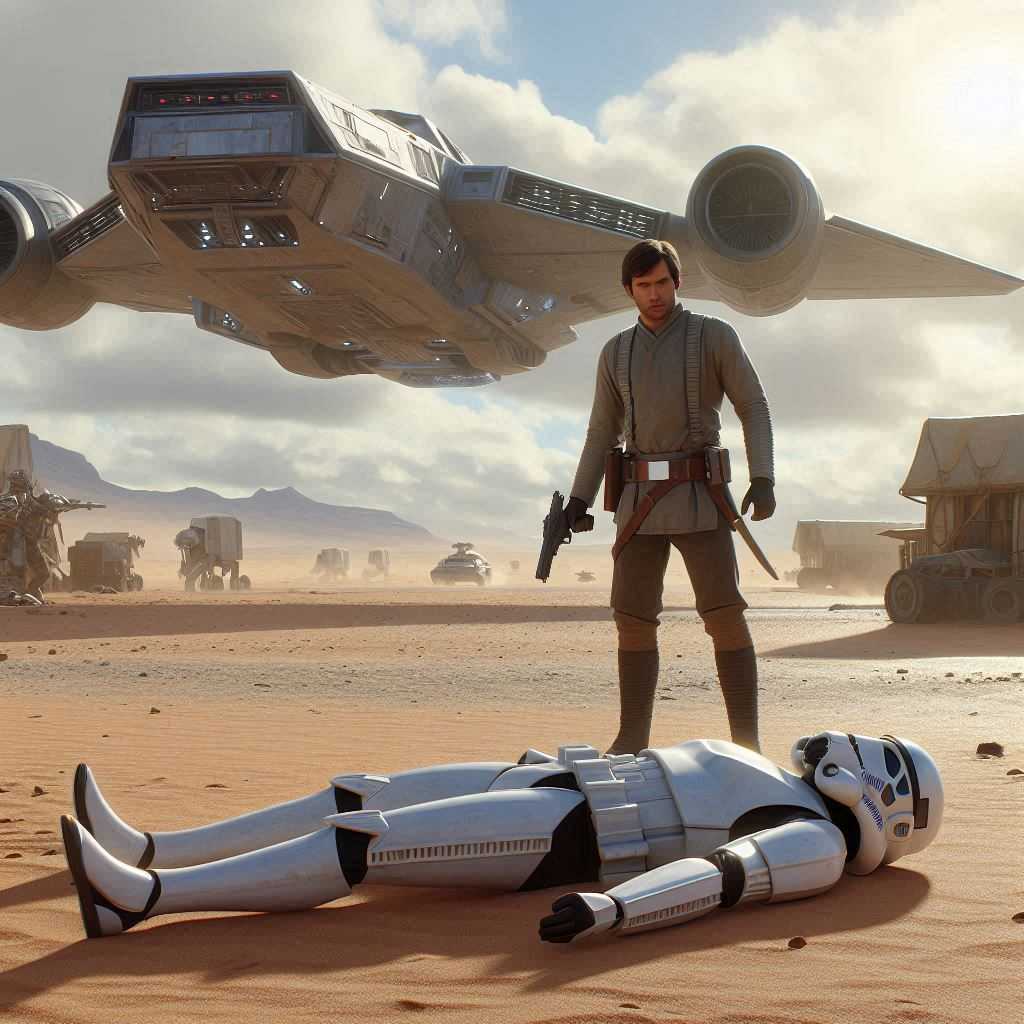
Our friend said that he was playing a Star Wars -themed role-playing game in a virtual world that allowed players to do some of the creating. This meant players could build structures, even space ships, and anything up to and including weapons using a C-based programming language. This fellow didn’t know programming, he said, but he was able to buy some scripts on the game’s marketplace and then reverse-engineer them to make them do what he wanted. For example, he modified a gun script to shoot bullets in all directions, added a smoke effect and a sound effect for an explosion, and as a result created a grenade.
Anyway, this creative fellow soon found himself rallying a small army of rebels in his Star Wars area. He explained how proud he was of how “popular” he thought he was getting. People were following him as a leader, and he was making fools of the Imperial troops patrolling the virtual city.
“Then one day, I realized what was actually happening,” he said. “We had just gotten done shooting up an Imperial patrol. I took a picture of myself standing over the Imperial Captain as a space ship animation took place above me. You couldn’t ask for a better propaganda shot. I was feeling pretty good about myself… and then my most feared lieutenant opened his microphone and said, ‘Okay, I have to go, I have to go to school now.’”
The player had the voice of a child. “That’s when I realized,” our author friend said. “I wasn’t a feared and respected leader of men in a galaxy far, far away. I was a third-world warlord with an army of children. I stopped playing not long after. It just wasn’t the same.”
While any of us would be tempted to laugh heartily at that story, one of the features of the virtual world in which it took place has an analog to what we do as writers and bloggers. You see, a game that lets you create parts of it usually has something called a “sandbox.” This is an area where you can create and destroy objects, test scripts, and otherwise test things without endangering the “real” virtual world on which people spend so much time and money. Testing new creations in a sandbox has many equivalents in the programming world, often in the form of “test environments” and other euphemisms for, “You can’t break anything important here.”
“I feel like we’ve found an interesting little corner of the sandbox here as far as the way we’re telling sci-fi stories. I don’t think it’s limited to sci-fi – I think anything fantastic can co-exist with people you and I know, and not these hyper-real movie people.” – Colin Trevorrow
That’s how you should approach your blogging when you’re feeling experimental. After all, a blog isn’t a published book. It’s a writing space, yes, and you can “publish” to it, but people are pretty tolerant of blogs being fluid. Don’t like a post? Edit it. Don’t want to go down that road? Delete it. You can “think out loud” on your blog, get feedback from readers, course-correct based on that feedback, and generally treat your blog like a sandbox. Here, you can’t break anything important. Here, you can work out things before you finalize them and actually put them to paper (virtual or physical).
Along the way, you might even be able to tell some fun stories — like, for example, the story of a man who thought he was a respected combat leader in a virtual world… only to find out, hilariously, that the truth was very different. Have fun with your sandbox, with your blog. That’s one of the reasons it’s so useful to you.
___
*This blog was written 100% by a human and contains no AI-generated written content.